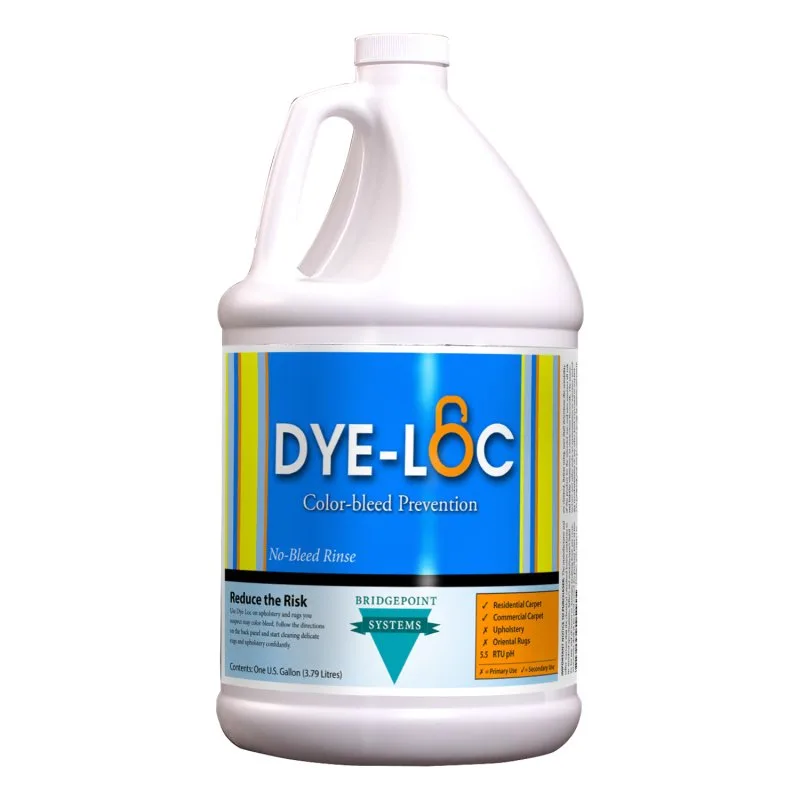
Bridgepoint Systems Upholstery Cleaning Dye-Loc No Bleed Rinse — CASE
Introduction to Bridgepoint Systems Upholstery Cleaning Dye-Loc No Bleed Rinse
Stocked in Fresno. If it is short when we pull it, you get a ship date before anything goes out.
- Ship weight
- 40 lb
- Shipping
- UPS Ground only — never air
About this product
Introduction to Bridgepoint Systems Upholstery Cleaning Dye-Loc No Bleed Rinse
Bridgepoint Systems Upholstery Cleaning Dye-Loc No Bleed Rinse is a revolutionary product designed to address the common challenges associated with upholstery cleaning, particularly concerning dye bleeding and fading. In the realm of professional cleaning, maintaining the integrity of fabrics, especially those prone to color bleeding, is paramount. This article aims to delve into the features, benefits, and proper usage of Dye-Loc to aid professionals in achieving superior results in upholstery cleaning endeavors.
Purpose of Dye-Loc
Dye-Loc serves as a critical fixing agent tailored for direct and reactive dyes. Its primary function is to lock fugitive dye-stuff at the molecular level while preserving the lightfastness of the dye. By doing so, it significantly enhances the colorfastness of dyed fabrics, ensuring long-lasting vibrancy and preventing undesirable bleeding or fading.
Benefits of Dye-Loc
Improved Washfastness
One of the key benefits of Dye-Loc is its ability to enhance washfastness. During the upholstery cleaning process, the risk of dye bleeding and fading is a common concern. However, with the application of Dye-Loc, these risks are mitigated, allowing for thorough cleaning without compromising the fabric's color integrity.
Enhanced Crockfastness
Crockfastness refers to the resistance of dyed fabrics against rubbing or transferring color onto other surfaces. Dye-Loc effectively enhances crockfastness, reducing the likelihood of color rubbing off onto adjacent fabrics or surfaces, thus maintaining the pristine appearance of upholstered items.
Anti-static Quality
In addition to its primary function of enhancing colorfastness, Dye-Loc also imparts an anti-static property to treated textiles. This feature further enhances the overall cleanliness and appearance of upholstered surfaces, making it a comprehensive solution for professional cleaning endeavors.
Usage Instructions
Proper application of Dye-Loc is crucial to maximizing its effectiveness in upholstery cleaning. Here are the recommended steps for its usage:
Testing for Colorfastness
Before applying any cleaning product, it's imperative to test the fabric for colorfastness. Conduct a pretest on a small, inconspicuous area of the fabric to ensure compatibility and avoid any adverse effects on the dye.
Dilution
In cases where fabric bleeding is anticipated, dilute Dye-Loc by adding 3 ounces per gallon of warm water. Apply this solution using a professional sprayer to ensure uniform coverage and effective penetration into the fabric fibers.
Pre-spray
Prior to rinsing, pre-spray the rug or fabric with a diluted solution of Bridgepoint Fabric Prespray (1:8 with warm water). This preparatory step helps loosen dirt and stains, facilitating more efficient cleaning during the subsequent rinsing process.
Rinsing
During the rinse and extraction process, add up to 3 ounces of Dye-Loc per gallon to your rinse water. This concentration aids in locking in the dye and minimizing the risk of bleeding or fading during the cleaning process.
Colorfastness Check
After completing the cleaning process, always conduct a colorfastness check to ensure that no bleeding or fading has occurred. This final step is crucial for verifying the effectiveness of the cleaning procedure and maintaining the fabric's integrity.
Additional Treatment
Depending on the bleeding characteristics of the fabric, additional treatments may be necessary. For fabrics exhibiting immediate bleeding, consider applying Dye-Loc followed by a dry foam application with an upholstery shampoo and extraction with Dye-Loc to address stubborn stains and ensure thorough cleaning.
In conclusion, Bridgepoint Systems Upholstery Cleaning Dye-Loc No Bleed Rinse is an indispensable tool for professionals in the upholstery cleaning industry. Its unique formulation and benefits, including improved washfastness, enhanced crockfastness, and anti-static qualities, make it a highly effective solution for preserving the beauty and integrity of dyed fabrics. By following the recommended procedures outlined in this article, professionals can achieve exceptional results and ensure customer satisfaction in their cleaning endeavors.
Frequently Asked Questions (FAQs)
Is Dye-Loc suitable for all types of upholstery fabrics?
Dye-Loc is compatible with most dyed cellulosic and protein fabrics and their blends. However, it's essential to conduct a colorfastness test before application to ensure compatibility and prevent any adverse effects on the fabric.
Can Dye-Loc completely eliminate the risk of dye bleeding?
While Dye-Loc significantly reduces the risk of dye bleeding during the cleaning process, complete elimination of this risk depends on various factors such as the type of fabric and the severity of staining. Conducting proper pretests and following recommended procedures are essential for optimal results.
Is Dye-Loc safe for use on delicate fabrics?
Dye-Loc is formulated to be gentle yet effective on most upholstery fabrics. However, for delicate or sensitive fabrics, it's advisable to consult the manufacturer's guidelines and perform a patch test before extensive application.
How frequently should Dye-Loc be applied during the cleaning process?
The frequency of Dye-Loc application depends on the severity of staining and the fabric's bleeding characteristics. In general, it's recommended to apply Dye-Loc during both pre-spraying and rinsing stages to ensure comprehensive protection against dye bleeding and fading.
Can Dye-Loc be used in conjunction with other cleaning products?
Yes, Dye-Loc can be used alongside other cleaning products, such as fabric presprays and upholstery shampoos. However, it's essential to follow the recommended dilution ratios and application guidelines to prevent any adverse interactions between the products.