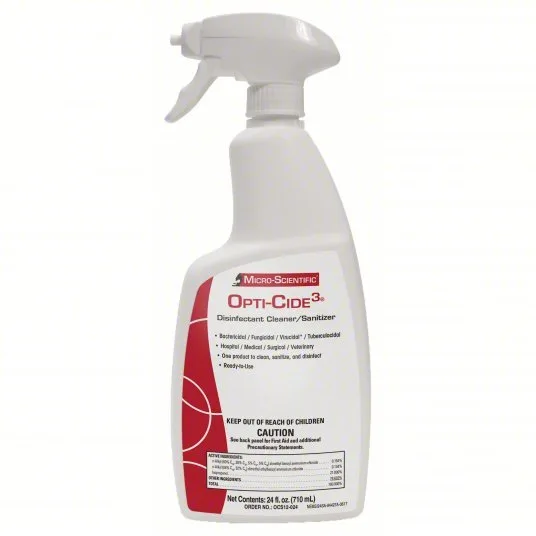
Micro Scientific Opti-Cide 3 Disinfectant 24oz
Micro Scientific Opti-Cide 3 Disinfectant: A Comprehensive Review
Stocked in Fresno. If it is short when we pull it, you get a ship date before anything goes out.
- Ship weight
- 2 lb
- Shipping
- Ships UPS, freight over 150 lb
About this product
Micro Scientific Opti-Cide 3 Disinfectant: A Comprehensive Review
In today's fast-paced world, the need for effective disinfection has never been more pronounced. With the constant threat of harmful pathogens and microorganisms, it's essential to have reliable solutions for maintaining clean and hygienic environments. One such solution is the Micro Scientific Opti-Cide 3 Disinfectant. In this comprehensive review, we'll delve deeper into its features, efficacy, and benefits to help you understand why it's a valuable addition to any disinfection regimen.
Understanding Disinfectants
What are Disinfectants?
Disinfectants are chemical agents designed to eliminate or inactivate microorganisms on surfaces, thereby reducing the risk of infection transmission.
Importance of Disinfection in Public Health
Effective disinfection plays a vital role in safeguarding public health by preventing the spread of infectious diseases and maintaining hygienic environments in various settings such as healthcare facilities, schools, and households.
Types of Disinfectants
There are different types of disinfectants available, including quaternary ammonium compounds, chlorine-based disinfectants, and alcohol-based disinfectants, each with its own unique properties and applications.
Overview of Micro Scientific Opti-Cide 3
Micro Scientific Opti-Cide 3 is a broad-spectrum disinfectant that is effective against a wide range of microorganisms, including bacteria, viruses, fungi, and spores.
Composition and Formulation
The formulation of Micro Scientific Opti-Cide 3 includes a blend of active ingredients such as isopropanol and quaternary ammonium compounds, which work synergistically to provide rapid and thorough disinfection.
Key Features and Benefits
Some key features and benefits of Micro Scientific Opti-Cide 3 include its fast-acting formula, compatibility with various surfaces, and compliance with regulatory standards such as EPA and OSHA guidelines.
Efficacy of Micro Scientific Opti-Cide 3
Antimicrobial Spectrum
Micro Scientific Opti-Cide 3 demonstrates a broad spectrum of antimicrobial activity, effectively killing a wide range of pathogens on hard nonporous surfaces.
Rapid Action and Contact Time
With its fast-acting formula, Micro Scientific Opti-Cide 3 requires minimal contact time for effective disinfection, making it ideal for use in high-traffic areas where quick turnaround is essential.
Compliance with Regulatory Standards
Micro Scientific Opti-Cide 3 meets stringent regulatory standards set forth by organizations such as the Environmental Protection Agency (EPA) and the Occupational Safety and Health Administration (OSHA), ensuring its safety and efficacy for use in various settings.
Application and Usage Guidelines
Surface Compatibility
Micro Scientific Opti-Cide 3 is compatible with a wide range of surfaces, including stainless steel, plastic, glass, and laminates, making it versatile for use in diverse environments.
Proper Application Techniques
To achieve optimal results, it's essential to follow proper application techniques recommended by the manufacturer, including ensuring adequate coverage and allowing sufficient contact time for disinfection.
Safety Precautions and Handling
Users should observe appropriate safety precautions when handling Micro Scientific Opti-Cide 3, including wearing personal protective equipment (PPE) such as gloves and goggles to minimize exposure to chemicals.
Advantages Over Traditional Disinfectants
Enhanced Effectiveness
Micro Scientific Opti-Cide 3 offers enhanced effectiveness compared to traditional disinfectants, thanks to its advanced formulation and rapid action against a broad spectrum of microorganisms.
Reduced Risk of Residue Buildup
Unlike some disinfectants that leave behind residue or films on surfaces, Micro Scientific Opti-Cide 3 evaporates quickly, leaving surfaces clean and free from residue buildup.
Environmental Considerations
Micro Scientific Opti-Cide 3 is formulated with environmental considerations in mind, with ingredients chosen to minimize ecological impact while maintaining efficacy.
Importance of Pre-Cleaning
Significance of Pre-Cleaning Surfaces
Pre-cleaning surfaces before disinfection is crucial as it helps remove dirt, debris, and organic matter, allowing the disinfectant to work more effectively.
Synergy with Disinfection Process
Pre-cleaning enhances the effectiveness of the disinfection process by removing barriers such as soil and biofilms, ensuring direct contact between the disinfectant and the target microorganisms.
Minimizing Risk of Infection Spread
By incorporating pre-cleaning into the disinfection protocol, the risk of infection spread is minimized, leading to safer and healthier environments for occupants.
Case Studies and Testimonials
Real-World Applications
Real-world case studies demonstrate the efficacy of Micro Scientific Opti-Cide 3 in various settings, including healthcare facilities, schools, and commercial establishments.
User Experiences and Feedback
User testimonials provide valuable insights into the practical application and effectiveness of Micro Scientific Opti-Cide 3, helping prospective users make informed decisions.
Clinical Trials and Research Findings
Clinical trials and research studies support the efficacy and safety of Micro Scientific Opti-Cide 3, further validating its use as a reliable disinfection solution.
FAQs
1.What makes Micro Scientific Opti-Cide 3 different from other disinfectants?
Micro Scientific Opti-Cide 3 stands out due to its broad spectrum of antimicrobial activity, rapidly eliminating a wide range of pathogens on hard nonporous surfaces.
2.Can Micro Scientific Opti-Cide 3 be used on all types of surfaces?
Yes, Micro Scientific Opti-Cide 3 is compatible with various surfaces, including stainless steel, plastic, and glass, making it versatile for use in different settings.
3.Is there a specific contact time required for optimal disi